


02 Jul 2026

Every home builder in India faces the same question: which cement is best for construction? The market offers dozens of options. The bags look similar. The prices vary. And your engineer or contractor might recommend something different from what the dealer stocks.
This guide cuts through the confusion. We cover all 15 types of cement used in construction in India, their grades, key properties, and where each one works best. We also explain which Taj Cement product matches each application — so you can make a confident, informed decision.
Why Choosing the Best Cement for Construction Matters
Cement binds sand, gravel, and water into concrete. That concrete holds up every column, beam, wall, and slab in your home. The type and grade you use determine:
- How strong your structure is under load
- How well it resists rain, moisture, and chemicals
- Whether cracks appear within 2–3 years or never
- Long-term maintenance costs over 30+ years
Using the wrong cement does not always show up immediately. It shows up years later as seepage in the roof, cracks in the plaster, or corrosion in reinforced columns. Soil type and rainfall also affect cement strength — especially in Northeast India.
Key Point: Always check the manufacturing date on the bag. Use cement within 3 months of manufacture. Cement older than that loses strength even in a sealed bag.
Build Your Home With the Right Cement
Browse Taj Cement’s full product range — engineered for Northeast India’s climate and soil conditions.
15 Types of Cement for Residential and Commercial Construction
India’s Bureau of Indian Standards (BIS) recognises multiple cement types for construction. Here are all 15 — what they are, what they do, and where they work best.
01. Ordinary Portland Cement (OPC)
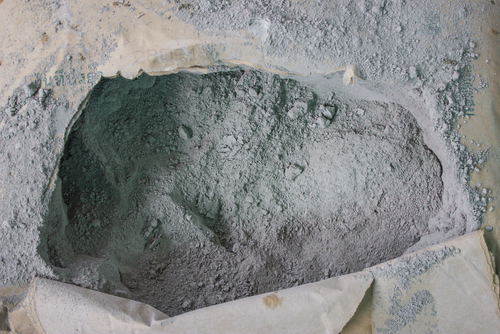
OPC is the most widely used cement in India. It is strong, reliable, and works for almost every structural purpose. It comes in three grades — 33, 43, and 53. Faster strength gain makes it ideal where construction moves quickly.
Where Can OPC Be Used?
- Foundations
- Columns & Beams
- Roof Slabs
- Roads & Bridges
02. Portland Pozzolana Cement (PPC)
PPC blends OPC clinker with fly ash or volcanic ash. It generates less heat while curing. It is more resistant to water absorption and chemical attack than plain OPC. Long-term durability makes it popular for home construction across India.
Where Can PPC Be Used?
- Plastering
- Masonry
- Roof Slabs
- Dams & Retaining Walls
03. Portland Slag Cement (PSC)
PSC combines OPC clinker with ground granulated blast furnace slag. It resists chloride and sulphate attacks better than OPC. It is excellent for reinforced concrete in coastal zones and aggressive soil environments.
Where Can PSC Be Used?
- Marine Structures
- Basements
- Bridges
- High-Rise Buildings
04. Rapid Hardening Cement
Rapid hardening cement gains strength much faster than OPC. It lets you remove formwork earlier and apply loads sooner. This saves time and money on tight project schedules.
Where Can RHC Be Used?
- Road Repairs
- Precast Elements
- Emergency Work
05. Extra Rapid Hardening Cement
This type gains strength even faster than rapid hardening cement. Manufacturers add a higher percentage of accelerating compounds to OPC. It is used when time is the most critical constraint.

06. Quick Setting Cement
Quick setting cement sets in a very short time — sometimes within 5 minutes. It is useful when water flow cannot be stopped for long, or when you need to minimise downtime in repair jobs. Do not confuse this with rapid hardening cement — quick setting is about setting time, not final strength.
07. Low Heat Cement
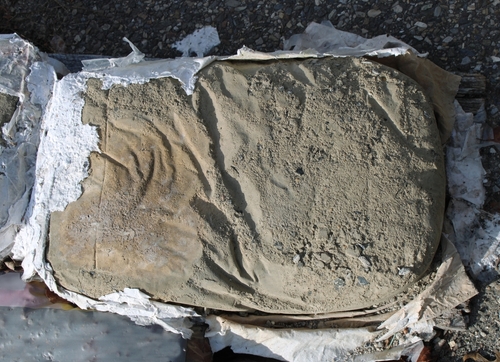
Low heat cement generates significantly less heat during hydration. This reduces the risk of thermal cracking in large, mass concrete pours. It takes longer to gain full strength but delivers excellent long-term durability.
08. Sulphate Resisting Cement (SRC)
Sulphate salts in soil or groundwater attack ordinary cement and cause concrete to crumble over time. SRC has a reduced tricalcium aluminate content, which gives it superior resistance to this chemical attack.
09. High Alumina Cement (HAC)
HAC is made from bauxite and lime. It develops very high early strength and resists high temperatures up to 1,600°C. It also handles chemical corrosion well. HAC is a specialist cement, not used in regular home construction.
10. White Cement
White cement is identical in chemistry to OPC but uses raw materials with very low iron oxide content. This gives it a bright white colour. It is used purely for decorative and architectural purposes — not for structural work.
11. Coloured Cement
Coloured cement adds mineral pigments to regular cement during grinding. It creates a wide range of colour finishes without surface coatings. It is widely used for decorative concrete applications in homes and public spaces.
12. Air Entraining Cement
Air entraining agents create millions of tiny, evenly spaced air bubbles in the concrete mix. These bubbles act as pressure-relief chambers during freeze-thaw cycles. The result is concrete that resists scaling and spalling in cold climates.
13. Expansive Cement
Expansive cement is formulated to expand slightly after setting instead of shrinking. This compensates for drying shrinkage and prevents cracking in confined or closed spaces. It is a specialist product for specific structural uses.
14. Hydrographic (Hydrophobic) Cement
Hydrographic cement sets and hardens even in wet or underwater conditions. Special additives prevent water from washing out the cement before it cures. It is the preferred choice wherever permanent water contact is a concern.
15. Portland Limestone Cement (PLC) / Oil Well Cement
PLC blends clinker with limestone, delivering comparable strength to OPC with a lower carbon footprint. Oil Well Cement is a highly specialised variant designed for extreme downhole pressure and temperature in oil and gas drilling — not used in home construction.
Cement Grades: Understanding 33, 43, and 53 Grade Cement
The cement grade indicates the minimum compressive strength (measured in MPa or N/mm²) that cement achieves after 28 days of curing under standard testing conditions. Choosing the right grade depends on the type of construction and the required concrete strength.
33 OPC Grade
Develops a minimum compressive strength of 33 MPa after 28 days. It is suitable for masonry, plastering, and general construction where concrete grades do not exceed M20. Although available, it is used less frequently in modern residential construction.
43 OPC Grade
Develops a minimum compressive strength of 43 MPa after 28 days. It is commonly used for residential construction, including plastering, flooring, brick masonry, precast elements, and RCC work where moderate strength is required.
53 Grade OPC
Develops a minimum compressive strength of 53 MPa after 28 days. It is preferred for high-strength structural applications such as foundations, columns, beams, roof slabs, bridges, and other RCC structures. It is commonly used where concrete grades of M25 and above are specified.
Common Mistake: Many homeowners use OPC 53 for everything thinking “more strength is better.” But OPC 53 in plaster or thin walls generates excess heat and causes shrinkage cracks. Use the right grade for the right job.
Want a detailed comparison for your local soil? Read: OPC 43 vs OPC 53 for Northeast soil conditions.
Key Properties of the Best Cement for Construction
Understanding these properties helps you see why one cement performs better in specific conditions.
| Property | What It Means | Why It Matters |
|---|---|---|
| Fineness | How finely the cement is ground | Finer particles hydrate faster, giving higher early strength |
| Soundness | Ability to hold volume after setting | Unsound cement cracks and expands – a sign of poor quality |
| Setting Time | Initial and final set time | Initial set should not be too fast (workability); final set not too slow (early loading) |
| Compressive Strength | Load-bearing capacity at 3, 7, and 28 days | Determines what structural grade of concrete you can achieve |
| Consistency | Water needed for a standard paste | Affects workability and water-cement ratio in the mix |
| Heat of Hydration | Heat released during curing | High heat causes thermal cracking in large pours |
| Loss on Ignition | Weight lost when heated to 900°C | Indicates presence of moisture or pre-hydration — lower is better |
| Specific Gravity | Density relative to water | Used in concrete mix design calculations |
Best Cement for Each Part of Your Home
Different parts of a house face very different stresses. Here is what to use where.
| Construction Area | Recommended Cement | Why It’s Suitable |
|---|---|---|
| Foundation | OPC 53 Grade / SRC / PSC | Use OPC 53 for high load-bearing strength. Choose SRC for sulphate-rich soil and PSC for waterlogged areas. |
| Columns & Beams | OPC 53 Grade | Provides high compressive strength and faster strength gain for critical structural elements. |
| Roof Slab (Dhalai) | OPC 53 Grade or PPC | OPC 53 offers high strength, while PPC reduces the heat of hydration, helping minimise thermal cracks in large slabs. |
| Walls & Masonry | OPC 43 Grade or PPC | Delivers adequate strength with better workability. PPC also provides improved bonding, especially in humid conditions. |
| Plastering | PPC or OPC 43 Grade | PPC offers a smoother finish and helps reduce shrinkage cracks in plaster. |
| Flooring | OPC 43 Grade | Suitable for screed work. White or coloured cement can be used for decorative floor finishes. |
You may read: Best cement for foundation, walls, flooring, and roofing.
Best Cement for Different Climates in Northeast India
Northeast India receives some of the highest rainfall in the world. Parts of Meghalaya, Assam, and West Bengal receive over 2,000 mm of rain annually. This affects how cement performs — and what type you should choose.
High humidity and frequent rain demand cement with:
- Low water permeability — so the roof and walls block rain penetration
- Sulphate resistance — wet, flood-prone soils often carry sulphates
- Controlled heat of hydration — large roof pours must not crack under temperature change
- Good workability in humid air — cement that stiffens too quickly in heat and humidity creates finishing problems
PPC and high-quality OPC 53 meet all these demands. Learn how weather directly impacts cement performance.
Also see: Best cement for house construction in Assam — a dedicated guide for Assam’s soil and climate.
For roof slabs specifically: Best cement for roof RCC in rainy and humid climates.
What to Check Before Buying Cement
Even the best cement brand cannot perform if the bag has been damaged or stored incorrectly. Check these things every single time.
- Manufacturing date on the bag. Use cement within 90 days of manufacture. Every month after that, strength drops by up to 5%.
- BIS / ISI mark. Confirm the IS standard number (e.g. IS 8112 for OPC 43). This certifies the product meets national quality standards.
- Feel the bag for lumps. Squeeze a handful. Lumps that don’t break apart mean moisture has entered and hydration has started — the cement is partially spent.
- Grade matches your specification. Check the bag matches exactly what your structural drawing or engineer specified.
- Buy from an authorised dealer. Find your nearest Taj Cement dealer to avoid counterfeit or mislabelled stock.
Storage Tip: Keep bags on a raised wooden platform, 30 cm from all walls. Cover with waterproof sheeting during rain. Stack no more than 10 bags high. Always use oldest stock first (FIFO — First In, First Out).
How to Choose the Best Cement for Construction
With 15 types and 3 grades in front of you, here is a simple decision framework.
| Your Situation | Best Choice | Taj Cement Product |
|---|---|---|
| Columns, beams, foundation in normal soil | OPC 53 Grade | Taj OPC 53 |
| Plastering, masonry, general walls | OPC 43 or PPC | Taj OPC 43 |
| Roof slab in humid / rainy climate | PPC or OPC 53 | Taj Dhalai Cement |
| High-rainfall zone — all round use | Premium / PPC blend | Taj Premium Cement |
| Foundation in sulphate-rich or waterlogged soil | SRC or PSC | Ask our technical team |
| Swimming pool, water tank, wet areas | Hydrographic cement | Ask our technical team |
| Decorative finish, exterior plaster colour | White or Coloured cement | Ask your local dealer |
| Lightweight walling, block construction | AAC Blocks + OPC 43 mortar | Taj AAC Blocks |
Also read: What factors influence cement price in India — so you can budget accurately without overspending.
FAQs
Which cement is best for house construction in India?
For structural elements — columns, beams, slabs, foundations — use OPC 53 Grade. For plastering, masonry, and walls, use OPC 43 or PPC. In high-rainfall regions like Northeast India, PPC or a premium blended cement gives better moisture resistance and longer durability.
What is the difference between OPC and PPC cement?
OPC (Ordinary Portland Cement) is a pure Portland cement that gains strength quickly. PPC (Portland Pozzolana Cement) blends OPC with fly ash, which generates less heat, improves workability, and gives better long-term durability — especially in humid or wet conditions. OPC is better for structural RCC; PPC is better for plastering and masonry.
Which cement grade is best for home construction — 43 or 53?
Use OPC 53 for RCC structural work (columns, beams, slabs, foundations). Use OPC 43 for plastering, masonry, and non-structural concrete. Using OPC 53 for plaster creates excess heat and causes shrinkage cracks. Match the grade to the job.
What is the best cement for a roof slab (dhalai)?
Taj Dhalai Cement is the purpose-built choice. It controls heat of hydration in large flat pours to prevent thermal cracking. OPC 53 Grade or PPC also work well.
How long does cement remain usable after manufacture?
Cement stored in good conditions loses approximately 5% strength per month after manufacture. Use it within 90 days. After 6 months, strength loss can exceed 25–30% — even in a sealed bag. Always check the date before buying.
Are AAC blocks better than bricks for home construction?
AAC blocks are lighter, thermally insulating, and reduce structural dead load. They can lower your overall construction cost by reducing the size of columns and beams needed.
Which cement is best for construction in Assam or Northeast India?
In Assam and the Northeast, high rainfall and humid conditions demand cement with high moisture resistance. Taj Premium Cement and Taj Dhalai Cement are both formulated for this environment.
What cement should I use for foundations in waterlogged areas?
Use Portland Slag Cement (PSC) or Sulphate Resisting Cement (SRC), depending on whether the main risk is waterlogging or sulphate-rich soil. Consult our technical team if you are unsure about your local soil conditions.
Latest Posts


Popular Tags
- 43 Grade Cement
- 53 Grade Cement
- best cement
- best cement for construction
- best cement for dhalai
- Best Cement for House Construction
- best cement for plaster
- Best Cement for Plastering
- best cement for roof
- Best Cement for Roof Slab
- Best cement in Assam
- Cement factories in Assam
- cement shelf life
- cement storage during monsoon
- cement storage tips
- dhalai cement
- OPC 53 Grade
- OPC Cement
- OPC vs PPC Cement
- PPC Cement
- types of cement


