


23 Jul 2026

Construction projects don’t stop when the seasons change. Homes, commercial buildings, and renovation work continue throughout the year, including during the monsoon. While rain itself doesn’t make cement unusable, it does change how cement should be handled before and during construction.
Many people assume that cement purchased during the rainy season is of lower quality. In reality, cement quality depends far more on storage than on the weather outside. If cement bags absorb moisture before use, their performance can be affected even before the mixing process begins.
That’s why choosing the best cement for construction is only one part of the decision. Storing it correctly and using it at the right time are equally important for achieving reliable construction results.
In this blog, we’ll look at the best time to use cement, real-time methods for cement storage during monsoon, and simple ways to identify cement that should no longer be used.
Does the Season Affect Cement Performance?
Cement is manufactured for use throughout the year. Whether construction takes place in summer, winter, or the rainy season, its performance depends on how it is stored, mixed, and cured.
The monsoon simply introduces additional challenges. High humidity, continuous rainfall, and damp surroundings increase the chances of moisture reaching stored cement. If the material absorbs moisture before use, its performance may already be affected before construction begins.
For this reason, experienced builders don’t avoid construction during the monsoon. Instead, they focus on better planning, storage, and material handling.
When Is the Best Time to Use Cement?
There isn’t a single season that can be called the best time for construction. Cement can be used at any time of the year, provided it is fresh and handled correctly.
Dry weather naturally makes construction easier. Materials remain protected, transportation is simpler, and site activities are less likely to be interrupted. During the monsoon, however, construction requires a little more planning. Cement should be delivered according to project requirements instead of being stored for long periods, and every bag should be protected from moisture until it is ready for use.
Why Cement Storage Becomes More Important During Monsoon
Cement begins reacting as soon as it comes into contact with moisture. That reaction is necessary during mixing, but it becomes a problem when it starts inside the bag.
Moisture can enter through damaged packaging, leaking roofs, damp floors, or prolonged exposure to humid air. Even without direct contact with rainwater, poor storage conditions can gradually affect cement quality.
This is why cement storage during monsoon should never be treated as an afterthought. Protecting cement before use is one of the simplest ways to maintain construction quality throughout the project.
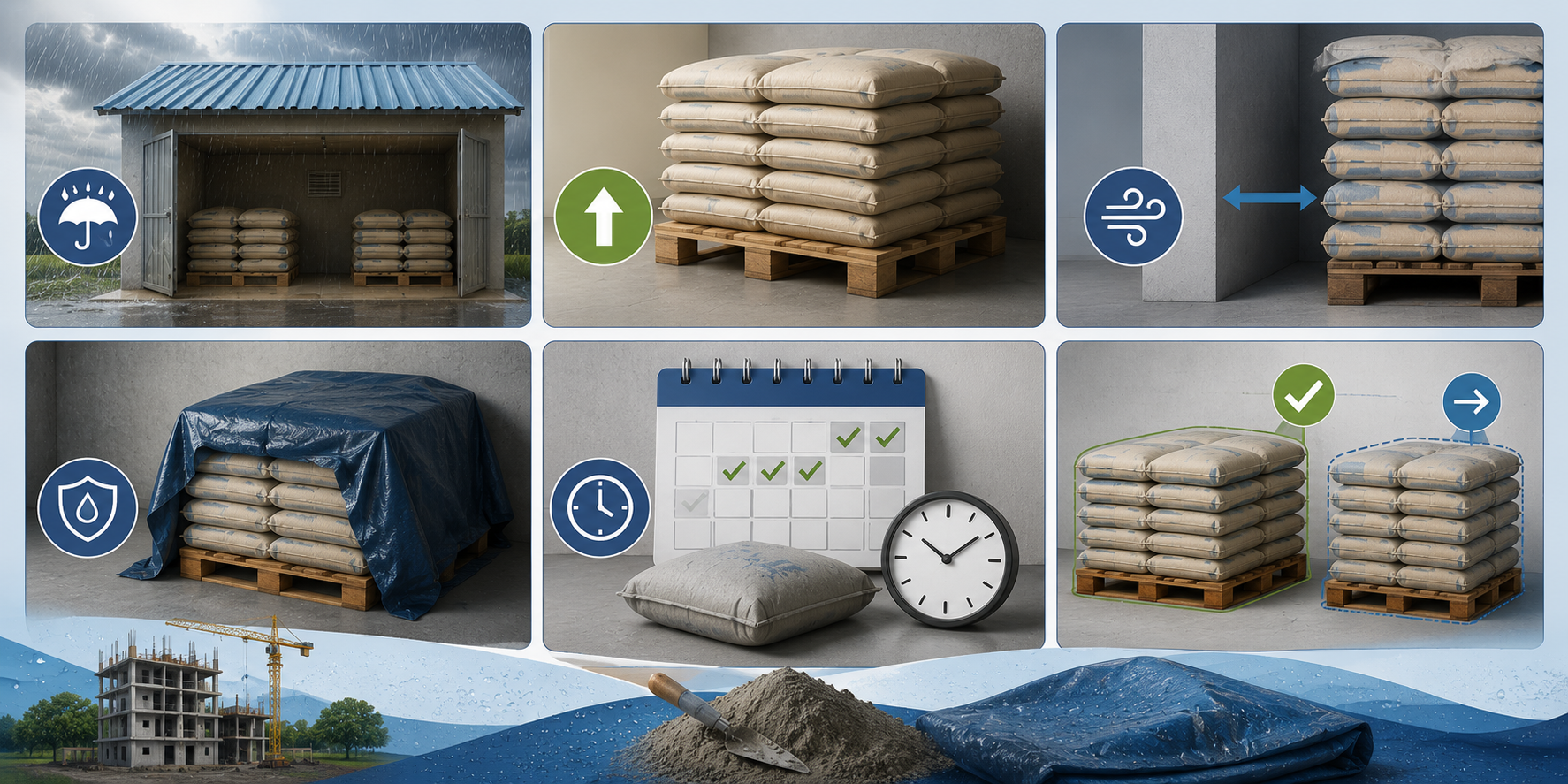
6 Cement Storage Tips for the Monsoon Season
Good storage practices protect cement from unnecessary moisture and help preserve its quality until it is ready for use.
Store Cement in a Dry, Covered Area
The storage area should remain completely dry throughout the rainy season. Water seepage, roof leaks, or open-sided sheds increase the chances of moisture reaching the cement bags. A closed storage room with proper ventilation provides the best protection.
Keep Cement Bags Above the Floor
Never place cement bags directly on the ground. Moisture from concrete floors or damp soil can gradually move into the bags. Wooden pallets or raised platforms create a protective gap and reduce this risk.
Leave Space Between the Wall and the Stack
Cement bags should not touch external walls, especially during the monsoon. Walls often retain moisture after rainfall, which can transfer to the cement over time. Leaving a small gap allows better air circulation and keeps the stack dry.
Cover the Cement Stack
Even when cement is stored indoors, covering the stack with waterproof sheets provides additional protection against humidity and accidental water leakage. The cover should protect the bags without trapping excessive moisture inside.
Avoid Long Storage Periods
Fresh cement always performs better than cement stored for several months. Following the recommended cement shelf life and purchasing cement according to construction progress reduces the possibility of moisture damage during storage.
Follow the First-In, First-Out Method
Every additional day in storage increases the chances of cement being exposed to moisture, especially during the monsoon. Using older stock first helps keep cement fresh and ready for construction.
Signs Your Cement May No Longer Be Suitable for Use
Even with proper storage, cement should always be checked before it is used. A quick inspection helps identify moisture damage and prevents poor-quality material from becoming part of the construction.
Hard Lumps Inside the Bag
Fresh cement should feel dry and free-flowing. Small soft lumps that break easily are generally not a concern, but large hard lumps usually indicate that moisture has already reached the cement. Such bags should be inspected carefully before use.
Uneven Colour
Fresh cement has a uniform grey appearance. Dark patches or noticeable colour variations may indicate moisture exposure during storage. If the colour looks inconsistent, it’s worth checking the condition of the cement before mixing.
Manufacturing Date
Cement performs best when it is used within its recommended cement shelf life. Before opening a bag, check the manufacturing date and avoid using cement that has been stored longer than recommended.
Why Storage and Cement Selection Go Hand in Hand
Storing cement correctly is only one part of the process. The other is choosing cement that is suitable for the job. Even the best storage practices cannot improve poor-quality cement, just as quality cement cannot perform as expected if it has absorbed moisture before use.
When the best cement for construction is paired with proper storage and handling, it reaches the construction site in the right condition and performs as intended throughout the project.
Final Thoughts
Construction during the monsoon depends less on the weather and more on how cement is handled. Choosing the best cement for construction, storing it correctly, and using it within the recommended cement shelf life help preserve its quality until construction begins.
When these basics are followed, cement performs the way it is meant to, helping deliver better results across every stage of construction.
FAQs:
1. Can cement be used safely during the monsoon?
Yes. Cement can be used throughout the year, including during the monsoon. The main thing is to protect it from moisture before use and follow the recommended storage and construction practices.
2. How long can cement be stored before it should be used?
Cement should be used within its recommended cement shelf life for the best results. The longer it remains in storage, the greater the risk of moisture affecting its quality, especially during the rainy season.
3. What is the best way to store cement during the monsoon?
Store cement in a dry, covered area, keep the bags on raised platforms, and protect the stack from moisture. Following these cement storage tips helps preserve cement quality until it is ready for use.
4. How can I tell if cement has been damaged by moisture?
One of the most common signs of damaged cement is the presence of hard lumps inside the bag. You should also check for uneven colour and confirm that the cement is still within its recommended storage period before using it.
5. Should cement be purchased in bulk before the monsoon begins?
Not always. It’s better to purchase cement according to the construction schedule. This reduces storage time and lowers the risk of moisture affecting the material before it is used.
Latest Posts


Popular Tags
- 43 Grade Cement
- 53 Grade Cement
- best cement
- best cement for construction
- best cement for dhalai
- Best Cement for House Construction
- best cement for plaster
- Best Cement for Plastering
- best cement for roof
- Best Cement for Roof Slab
- Best cement in Assam
- Cement factories in Assam
- cement shelf life
- cement storage during monsoon
- cement storage tips
- dhalai cement
- OPC 53 Grade
- OPC Cement
- OPC vs PPC Cement
- PPC Cement
- types of cement


